SAE Aero Design 2026
SAE Aero Design
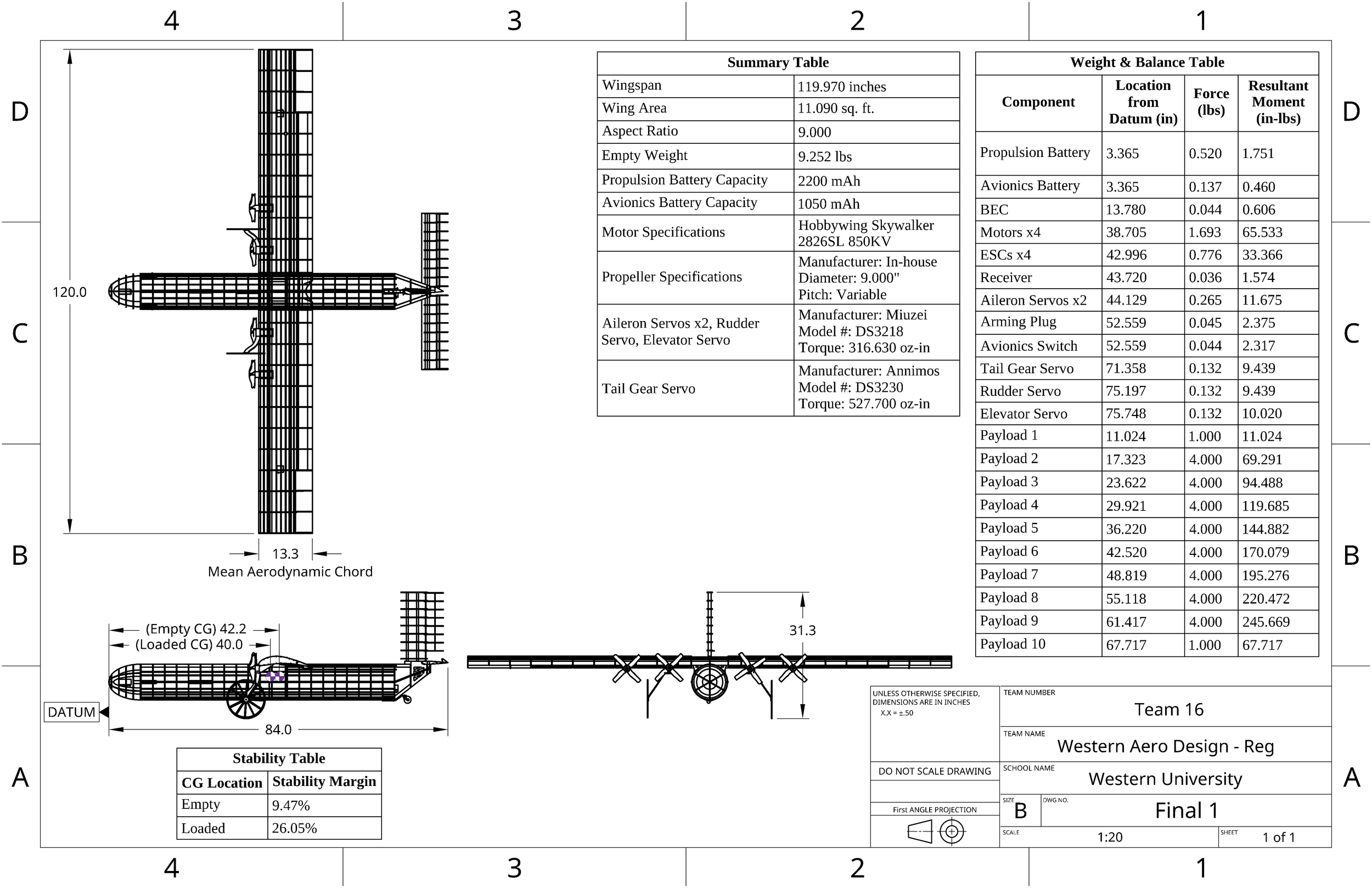
SAE Aero Design is a yearly competition the challenges students to design, build, and fly remote controlled aircraft in one of three categories. Regular class is a cargo carrying aircraft with a 55 lb MTOW, 120-inch Wingspan, and 2200 mAh that heavily restricts the use of carbon fiber re-enforced plastics.
Responsibilities:
Regular Lead:
Project Scheduling
Task Assignment
Material Sourcing and Procurement
Sponsorship Relations
Feasibility Analysis
System Level Design
Project Outcome
Wing Lead:
Configuration Analysis
Preliminary Calculations
Structural Design
FEA & CFD Analysis
Non-Destructive Testing
Wind Tunnel Testing
Test Flight 1
The first test flight was conducted February 22nd and confirmed air worthiness of the design.
A sharp veer right during takeoff was observed and attributed to a misaligned landing gear during construction.
Pilot reported a tail-heavy feeling while flying
A large amount of deflection in the front landing wheels was observed but no permanent deformation in the aluminum wheels or damage in the Carbon fiber struts was observed
As part of the competition a report of the design is required. Limited to 30 pages double spaced it is light on details in areas but gives a good overview of the process the team went through to come to the final design. My ability to format a proper design document was shaped by this early attempt.
Competition Results
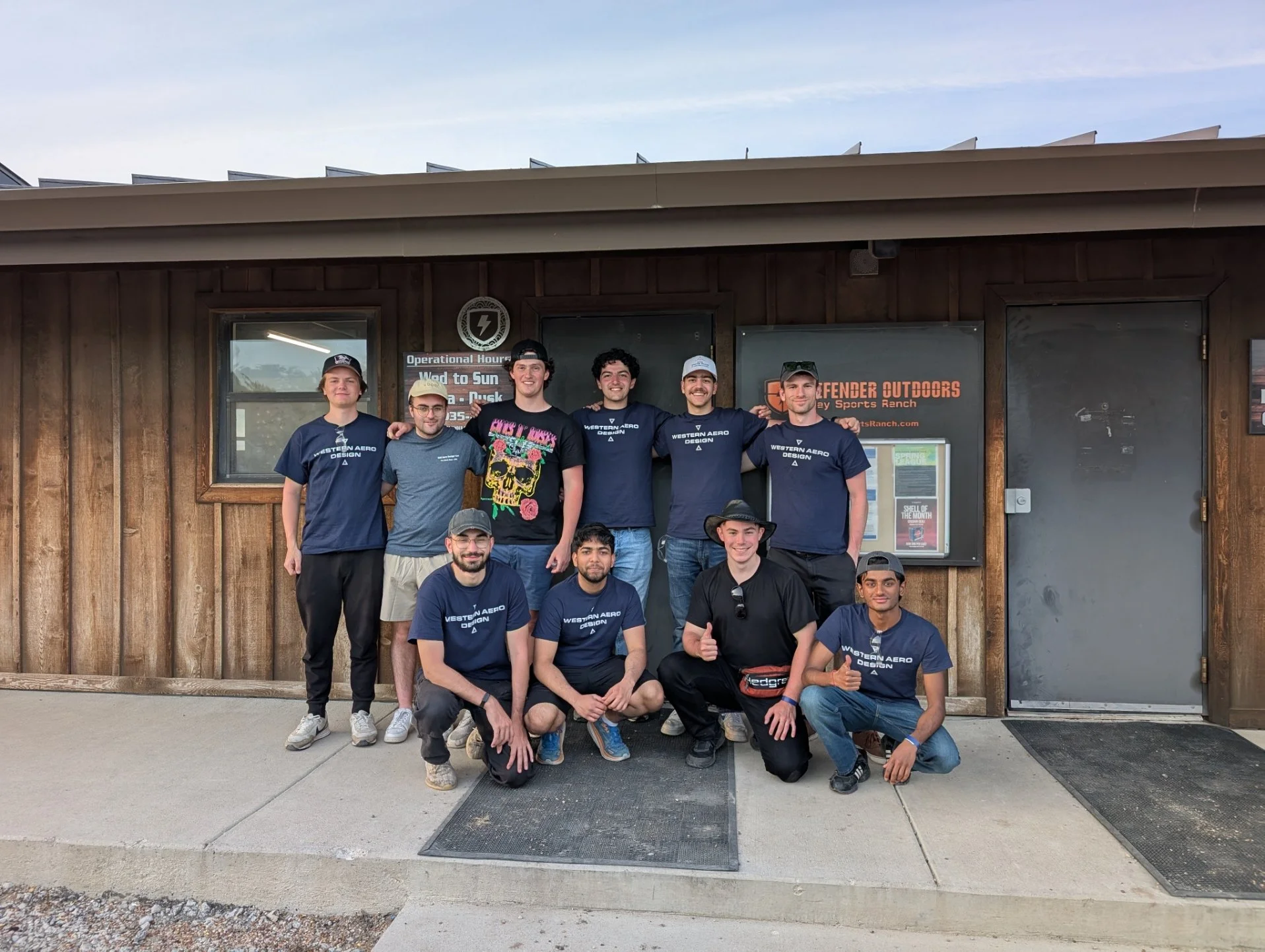
Western Aero Design came 21st overall out of 35 teams.
10th in Design Score
23rd in Presentation Score
14th in Mission Score
This competition pushes teams to improve their design, communication, and problem-solving skills while working as a cohesive unit. As Western University’s first venture into the regular class I am proud of my team’s performance. while there is room for improvement, the team was able to achieve the goals set out at the beginning of the year:
Get a plane off the ground and land successfully
Successful flight before competition and a successful mission flight at competition
Manufacture two full planes for redundancy at competition
Both planes flown during competition
Place Top 10
Came 10th in design score
Lessons Learned
During competition there were some design flaws and decisions that held the team back from achieving the planes full performance.
Starting with the design flaw. The landing gear did not account for the bending moment experienced by the forward position of the wheel relative to where it connected to the motor pylon. While the first plane did not experience an issue, an oversight in manufacturing tolerances between the two planes were enough that the second plane was not able to support the weight of a loaded aircraft and lead to significant delays in the team’s ability to fly. This limited the number of flights attempts the team was able to achieve over the weekend
An oversight in decision making led to the first plane crashing on its first test flight at competition. The decision was to test the plane with a predicted payload given wind tunnel data and air density at the location of the competition. While the plane was able to take off, since it was at the top end of its payload capacity it was difficult to control and lead to our student pilot attempting to gently land on the grass instead of the runway. I failed to consider not only the engineering numbers on paper but also the experience level of our pilot with this plane. This led to the team putting the pilot into a very difficult scenario on an aircraft they had only flown once before. With extensive damage to the first plane the backup plane was used for the remainder of the weekend.